You’ve got your plans ready. The builder is lined up. Work is about to start. Then one question comes up:
Has the house been staked yet?
A lot of homeowners aren’t sure what that means. Some think the builder handles it. Others assume it’s just a few sticks in the ground. That’s not the case. House staking is the step that places your home exactly where it belongs before anything gets built.
Once foundation work starts, changes get hard fast. So this step matters more than most people think, especially for homeowners preparing to build in Columbus.
What House Staking Really Means on Your Property
House staking is how surveyors take your approved plans and lay them out on your land. They mark the exact position of your home so the builder knows where everything goes.
At this point, the project shifts from paper to real space. The crew doesn’t rely on drawings once they’re on site. They follow the marks placed on the ground.
That’s why accuracy matters here. Even a small shift can affect how the home fits on the lot.
When House Staking Happens in the Building Process
Timing plays a big role. House staking usually happens after your plans are approved and your permit is cleared. Your builder is ready to move, but excavation hasn’t started yet.
That gap between approval and digging is where staking fits in.
If staking comes late, the project slows down. Builders don’t want to move dirt until they know the layout is correct. On the other hand, if staking happens too early and the plans change, it can lead to confusion on site.
So it needs to happen at the right time, with the final plans in place.
What Surveyors Mark Before Foundation Work Begins
Once the surveyor arrives on site, they start marking the points that will guide the entire build. At a glance, the stakes might look simple. In reality, each one has a job, and the builder depends on them from the first day of work.
They begin by marking the footprint of the house. This shows exactly where the structure will sit on the lot. These points outline the shape and position of the home so the crew knows where everything begins.
After that, they place offset stakes a short distance away from the footprint. Once excavation starts, the original points can get disturbed. These offset stakes stay in place and give the crew a reliable reference as they work.
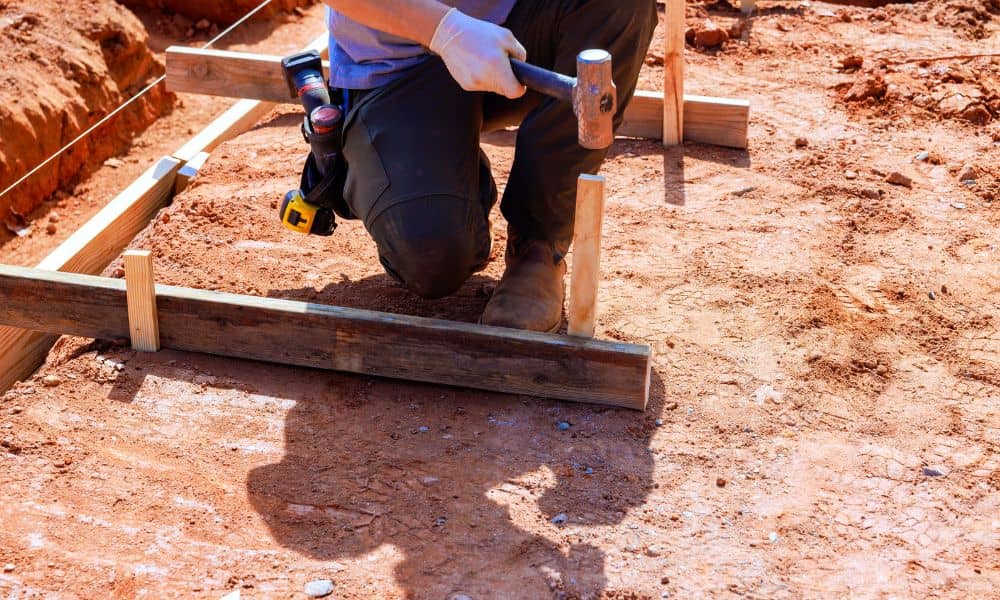
They also mark the lines where the foundation will go. This part is what most people call a foundation layout survey, and it’s what the crew uses when they set forms and get ready to pour concrete. If those lines are even slightly off, the rest of the build follows that mistake.
You’ll also see markers that help keep the layout in the right position across the lot. These act as a check so the house doesn’t shift too close to areas it shouldn’t be, especially when property line survey details are involved. Builders usually look at these before they start digging.
If the plans include a garage or other attached features, those areas get marked too. That way, everything lines up properly once construction moves forward.
On some sites, the surveyor will add elevation marks as well. These show how high the foundation should sit. With that in place, the builder can handle grading and drainage with more confidence as the project moves ahead.
How Builders Use These Marks During Construction
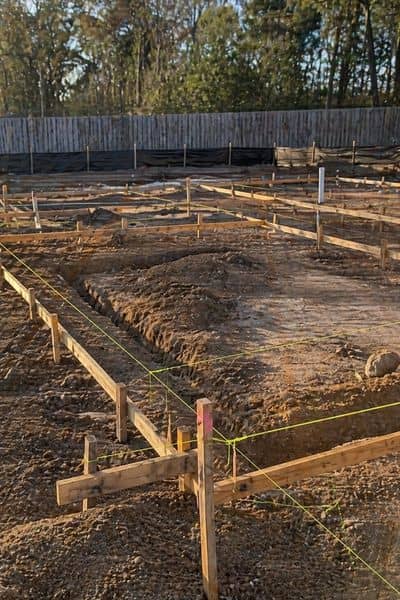
Once staking is complete, the builder takes over.
The crew uses the marks to guide excavation, footing placement, and foundation alignment. Instead of guessing, they follow the layout that’s already in place.
As work begins, heavy equipment moves across the site. That’s why offset stakes matter. They keep the layout intact even when the original points are disturbed.
If the marks stay clear and accurate, the build moves smoothly. If they get moved or ignored, problems show up quickly.
What Can Go Wrong Without Clear House Staking
Mistakes at this stage don’t always look big at first. A small shift in layout can seem minor, but it affects everything that follows.
The foundation might sit slightly out of position. The alignment between the house and driveway could feel off. Crews may stop work to double-check measurements, which slows the project down.
These issues don’t always come from bad work. They often come from missing or unclear layout at the start.
Once concrete is poured, fixing the problem becomes much harder. That’s why this step carries so much weight.
What Homeowners Should Know Before Work Begins
It helps to stay involved, even if your builder handles most of the process.
Make sure your house staking survey is done before excavation starts. Confirm that the layout matches your final plans. If you have the chance, walk the site and look at the markings.
Seeing the layout on the ground gives you a better sense of how your home will sit on the lot. It also gives you time to catch anything that feels off before construction moves forward.
What to Expect From a House Staking Service
The process is direct. The surveyor reviews your plans, visits the site, and places the necessary markers.
They check the layout to make sure it matches the approved design. Then they mark the key points that the builder will use during construction.
In some cases, they may also coordinate with the builder to keep everything on track. Clear communication helps avoid delays and confusion once work begins, which is especially helpful on active residential builds around Columbus.
Why House Staking Matters Before Concrete Is Poured
This step may not look complex, but it sets the entire project in motion.
The stakes on the ground control where your home gets built. Every step that follows depends on those marks being correct.
If the layout is right, construction moves forward with confidence. If it’s off, the problem doesn’t stay small. It carries through the rest of the build.
That’s why house staking isn’t just another task on the schedule. It’s the moment where your plans take shape in the real world.
Get the Layout Right Before You Build
There’s a short window before construction begins when changes are still easy to make, and house staking happens right in that space. It gives you a clear layout before anything becomes permanent, and it gives your builder something solid to follow once work starts.
If you’re getting ready to build, it helps to schedule your house staking services early so everything is marked before the crew arrives. That way, the layout matches your final plans, and there’s no second-guessing once work begins.
Because once the foundation is set, everything else follows.