An ALTA survey is one of the most important steps you can take before buying a mixed-use building. It gives you a clear, verified picture of the property’s boundaries, easements, and improvements before you sign anything. Skip it, and you may discover problems after closing that cost far more to fix than the survey itself.
Why Mixed-Use Buildings Require a Deeper Level of Due Diligence
Mixed-use buildings are not like standard commercial properties. They combine retail, office, and residential functions under one roof. That complexity creates more legal and physical layers to unpack.
More Tenants, More Risk
Each use type in the building may have different access needs. A ground-floor restaurant needs delivery access. Upstairs tenants need separate entries. Retail spaces may share walls with apartments. Each of these setups creates potential conflicts that are easy to miss during a walkthrough.
What a Walkthrough Will Not Show You
A property tour lets you see the space. It does not show you:
- Where the legal boundary actually sits
- Whether the building crosses a setback line
- What easements run through or around the property
- Whether a shared access agreement is recorded or just informal
These are the issues that surface later. With a mixed-use building, the risk of overlapping agreements and undisclosed restrictions is higher than with single-use properties.
What an ALTA Survey Confirms Before You Commit to Purchase
An ALTA/NSPS Land Title Survey is the most detailed survey standard used in commercial real estate. It is accepted by title companies and lenders across Ohio and the country.
What It Physically Verifies
An ALTA survey shows:
- The exact location of property boundaries
- Where the building sits in relation to those boundaries
- Parking areas, fences, driveways, and other improvements
- Encroachments from or onto neighboring parcels
How It Compares to Legal Documents
The survey cross-checks the legal description in the deed against physical reality. If the listing says the building sits on a 10,000-square-foot lot, the survey confirms it. If the recorded easement runs along the north boundary, the survey shows exactly where that falls on the ground.
This matters because sellers do not always know what is recorded on a property. Title searches find documents. An ALTA survey shows what those documents mean in the real world.
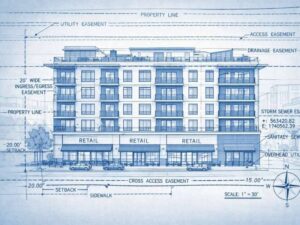
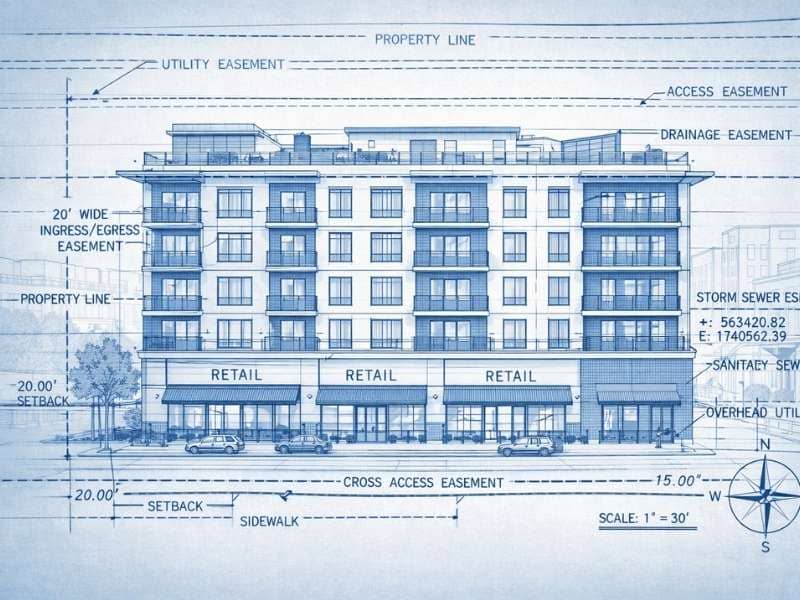
Hidden Access Rights, Shared Spaces, and Easement Conflicts
This is where mixed-use buildings get complicated fast.
Common Shared Infrastructure Issues
Many mixed-use buildings in Ohio cities were built decades ago. Informal arrangements became the norm. Today, those arrangements may not be documented, or they may be recorded in ways that restrict what you can do with the property.
Watch for:
- Shared hallways used by both retail and residential tenants
- Alley access agreements with neighboring properties for deliveries or parking
- Utility easements that cross through the buildable area
- Parking agreements that grant access to a surface lot you assumed was private
- Ingress and egress easements that benefit other parcels and limit your redevelopment options
Why These Conflicts Are Hard to Spot
Easements are recorded in the title chain, but they are described in legal language. Without a survey that plots them visually, you may not realize an easement cuts directly through the area where you planned to add square footage or expand the building footprint.
An ALTA survey maps each easement against the physical property. That makes conflicts visible before you close.
How Survey Findings Influence Redevelopment Plans and Investment Value
If you are buying a mixed-use building to redevelop it, the ALTA survey is not optional. It shapes your entire plan.
Zoning and Footprint Accuracy
Ohio municipalities have setback rules, height restrictions, and lot coverage limits. If the existing building is already at or near those limits, the survey tells you. If you planned to add a floor or expand the footprint, an encroachment or easement restriction could stop that plan before it starts.
Usable Space and ROI
An easement through a rear parking area may reduce the number of usable spaces. That affects your lease terms for retail tenants who depend on customer parking. Fewer spaces can mean lower rents, which lowers the income the property can support.
A utility easement through a potential addition area may eliminate an entire design option. Redesigning after you have already paid architects and engineers costs money and time.
Investment Value
Lenders and equity partners want to know the property is what it appears to be. ALTA survey findings feed into the due diligence package. Issues that surface in the survey can become negotiating points. You can ask the seller to resolve them, lower the price, or provide indemnification.
If you find these issues after closing, you bear the cost.
Why Early Survey Review Helps Prevent Costly Closing Surprises
The timing of your ALTA survey matters as much as having one.
Order It During Due Diligence
Most Ohio purchase agreements include a due diligence period of 30 to 60 days. Order the ALTA survey in the first week. Survey firms need time to research the title, field the property, and draft the plat. Waiting until the last week of due diligence leaves no time to act on what you find.
What Happens When You Find Issues Late
If an easement conflict surfaces after you have committed financing, you face limited options. You can try to renegotiate, but the seller knows your position is weak. You may have to accept unfavorable terms or lose your earnest money deposit.
In competitive Ohio markets like Columbus, Cincinnati, and Cleveland, sellers do not always wait. If your deal falls apart due to a late discovery, the property may go to another buyer before you can resolve the issue.
What Early Review Allows
When you review the ALTA survey during due diligence, you have time to:
- Request the seller cure an encroachment
- Obtain legal counsel on a recorded easement
- Revise your redevelopment plans before engaging a design team
- Renegotiate the purchase price based on verified site conditions
- Make an informed decision to walk away with your deposit
Early review is not just good practice. In Ohio’s active commercial markets, it is a competitive advantage.