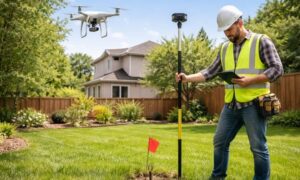
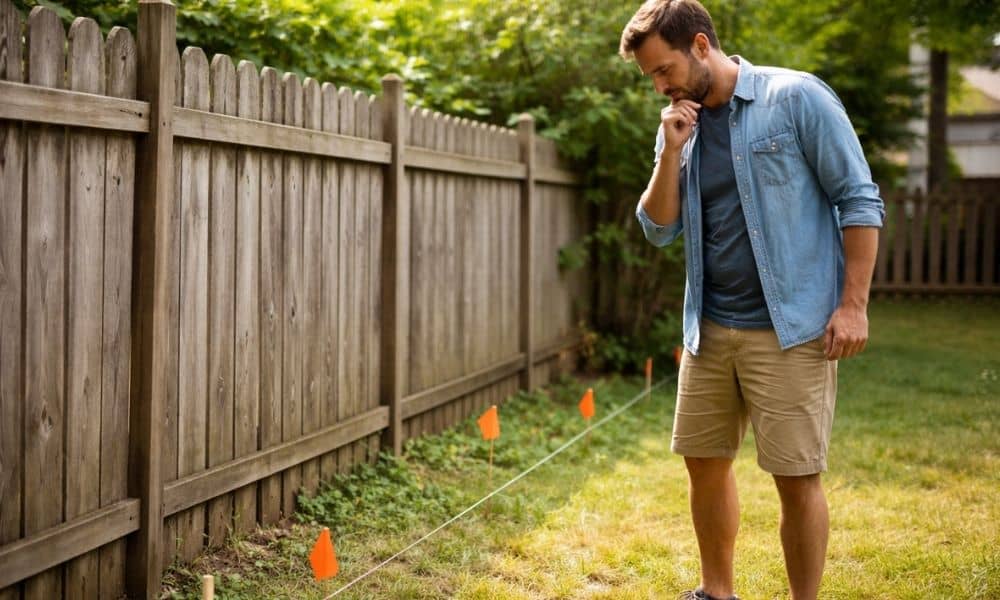
You look at your old fence and think, “It’s been here for years. I’ll just replace it in the same spot.” That sounds simple. However, this is where many homeowners run into problems. An old fence does not always sit on the true property line. Over time, things change. Also, past owners may have guessed the boundary instead of confirming it. So if you rebuild in the same place, you might repeat the same mistake. That is why thinking about a land survey for fence placement early can save you from stress later. It usually only comes up when you start looking into it a bit more and realize you’re not fully sure where your exact property line is.
The Common Mistake: Trusting the Old Fence Line
Most people assume the existing fence marks the boundary. After all, it has probably been there for years. However, that does not make it correct.
In many Columbus neighborhoods, especially older ones, fences were placed based on rough estimates. Back then, homeowners did not always confirm exact lines. Because of that, small errors became normal.
At first, a few feet may not seem like a big deal. Yet when you rebuild a fence, that small error becomes permanent. It also becomes visible.
So instead of treating the old fence as a guide, it is better to treat it as a clue—not proof. That’s usually the point where people start digging a little deeper, sometimes even looking into a survey to check your property line, once they realize things don’t quite line up.
Why Online Maps Can Be Misleading
Today, it feels easy to check your property using online tools. You open a map, zoom in, and see clear boundary lines. Because of that, many homeowners feel confident enough to plan a fence.
However, those lines are only estimates.
Parcel maps and satellite images help you understand your lot. Still, they do not show exact measurements on the ground. In some cases, the lines may be off by several feet.
That difference matters more than you think. A fence placed even slightly off can affect how your property looks and functions.
So while digital maps are useful, they should not guide your final decision.
The Hidden Factor: Easements on Your Property
Even when you stay within your lot, there is another detail to consider—easements.
An easement allows certain parts of your property to be used for specific purposes. This often includes utilities or drainage paths. Although you own the land, you cannot block access in those areas.
In Columbus, many properties include easements that are not obvious at first glance. Because of that, a fence placed in the wrong spot can interfere with something important underground or nearby.
This is one of the reasons fence placement is not as simple as it seems.
Why Utility Checks Should Come Before Installation
Before any digging begins, it is important to know what lies beneath your yard.
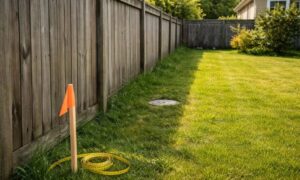
That is where OHIO811 comes in. This service marks underground utilities so you can avoid damaging them.
Without this step, you risk hitting gas lines, water pipes, or electrical systems. That can delay your project and increase costs.
However, it is important to understand the difference. Utility markings show where lines are, not where your property ends.
So while this step is necessary, it works best when combined with a clear understanding of your boundary.
When Fence Replacement Becomes a Layout Decision
At first, replacing a fence feels like a simple swap. Yet in many cases, it turns into a layout decision.
This often happens when the property is not perfectly straight or flat. For example, corner lots, sloped yards, and irregular shapes make placement more complex.
In these situations, even a small shift in alignment becomes noticeable. The fence may look uneven compared to nearby properties. It may also create confusion about where one yard ends and another begins.
Because of that, placement becomes just as important as the fence itself.
When It Makes Sense to Pause and Verify
Not every fence project needs extra steps. However, some situations should make you stop and take a closer look.
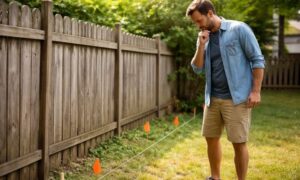
If your property corners are unclear, or if nearby fences do not line up, it is worth checking further. The same applies if you plan to extend or change the fence layout.
Even a simple feeling of uncertainty is enough reason to pause.
At that point, considering a land survey for fence placement becomes a smart move, not an extra one.
How a Land Survey for Fence Placement Helps
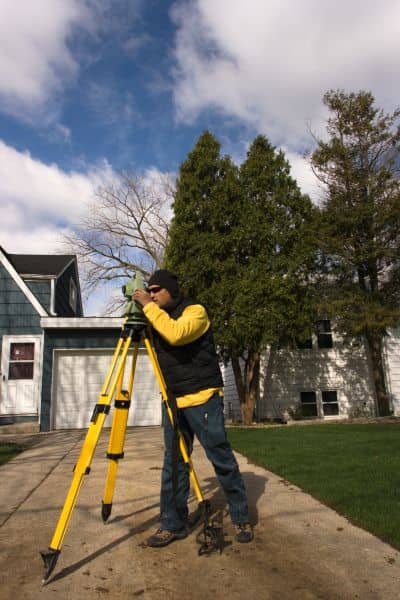
Instead of guessing, a land survey for fence gives you a clear picture of your property.
A licensed land surveyor checks measurements, reviews records, and locates physical markers. As a result, you know exactly where your boundary sits.
This helps in a practical way. Your contractor can follow a clear layout. Your fence lines up properly with your lot. Most importantly, you avoid placing anything in the wrong location.
Rather than fixing mistakes later, you prevent them from happening at all.
A Better Way to Approach Fence Projects
Instead of rushing into installation, it helps to slow down and look at the bigger picture.
Start by understanding your property beyond what you see. Look at maps for general guidance, but do not rely on them alone. Pay attention to anything that feels unclear, whether it is a corner point or a change in direction.
Then think about what lies beneath your yard. Utility lines and easements often affect placement more than expected.
From there, decide if your project feels straightforward or uncertain. If anything seems off, bringing in a professional early can make the process smoother.
This approach keeps your project simple while still protecting you from avoidable issues.
Small Errors Can Turn Into Bigger Problems
It is easy to think that a small shift in fence placement will not matter. However, even minor mistakes can create larger problems over time.
You may need to adjust the fence after installation. You may also face delays or extra costs. In some cases, the entire section may need to be redone.
Because of that, checking details early often saves more time than rushing ahead.
Build with Confidence, Not Assumptions
Replacing a fence should be a straightforward project. However, the decisions behind that fence matter more than most people expect.
Instead of relying on old lines or digital maps, take the time to understand your property clearly. A thoughtful approach leads to a better result.
In the end, a fence should not just look right—it should be in the right place.