You walk your yard and try to find the metal pin that marks the corner of your land. Maybe you want to build a fence or add a driveway. However, the marker is gone. You search the grass and the soil, but you cannot find it. This happens more often than people think. When property markers disappear, many owners ask a simple question: Can drone surveying replace the missing marker?
Drones now fly over farms, construction sites, and large properties. They take clear photos and create detailed maps. Because of that, it sounds possible that a drone could just fly over your land and show exactly where your property line sits.
However, the truth is a bit different. Drone surveying helps surveyors map land quickly, but it cannot replace the process used to confirm legal property lines. To understand why, we need to look at how markers work and how surveyors find them.
Why Property Markers Go Missing
First, it helps to know that missing markers are very common. Many people think someone removed the marker on purpose. In most cases, that is not true.
Markers often disappear because of normal changes to the land.
For example, yard work can bury them. When people add soil, plant grass, or build flower beds, the marker can end up under several inches of dirt. After a few years, no one can see it anymore.
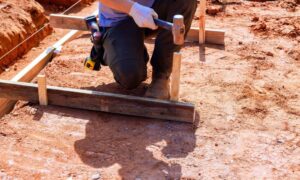
Construction work can also disturb markers. Heavy equipment may move soil, push pins deeper, or bend the marker. Fence installers sometimes remove a marker without knowing what it is.
Weather also plays a role. Rain can wash soil across the land. Over time, the ground shifts and slowly covers the marker.
Because of these changes, many markers still exist but sit hidden underground.
What Drone Surveying Can Do
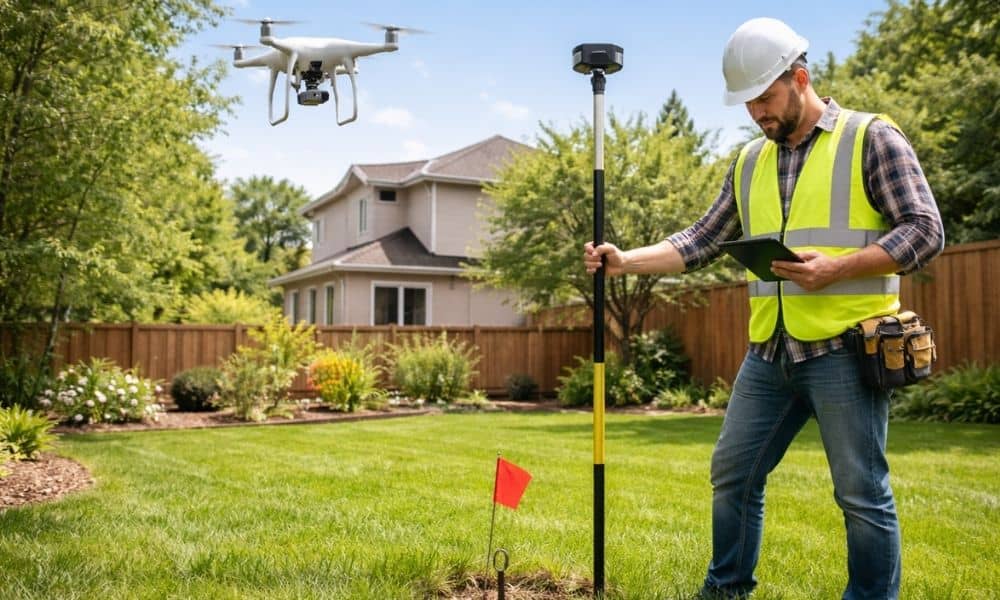
Today, many surveyors use drone surveying to collect land data. A drone flies over the property and takes many photos from above. Special software then connects those photos to create one large map.
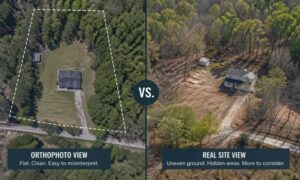
This map shows the land in great detail. It can reveal trees, buildings, fences, and driveways. It also shows the shape of the land, including slopes and low areas.
Because drones work from the air, they can map large spaces very fast. Surveyors can see the whole property in a short time.
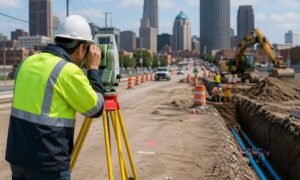
For that reason, drone surveying helps with many jobs. Builders use it before starting construction. Engineers study the maps to plan roads and drainage. Property owners use aerial maps to understand their land better.
Even so, a drone map does not show legal property lines.
Why Drone Surveying Cannot Replace Property Markers
Many people think a drone image should reveal where the boundary sits. After all, the map looks clear and accurate.
However, property lines do not appear on the ground like a painted stripe.
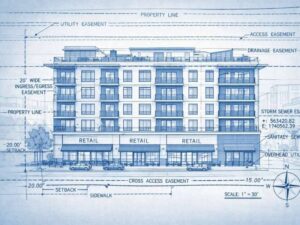
A property line comes from legal records. These records include deeds, plats, and past surveys. Surveyors study those documents and compare them with evidence found on the land.
Because of this, a drone image alone cannot confirm a property line.
For instance, a fence may appear in the aerial photo. Yet the fence might not sit on the true boundary. Sometimes people build fences a few feet inside their property to avoid disputes.
Driveways and sheds can also cross boundaries. The drone may show them clearly, but it cannot tell who owns the land beneath them.
So while the drone captures what we can see, it cannot prove where the legal line belongs.
How Surveyors Find Missing Property Markers
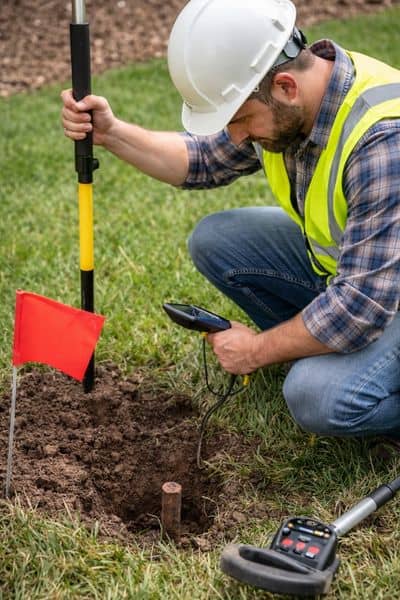
When a marker disappears, surveyors follow a careful process to locate it.
First, they review property records. Surveyors study old surveys, plats, and deed descriptions. These records explain how the boundary was first measured.
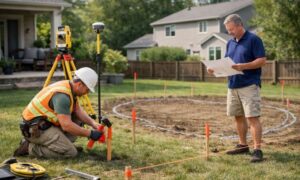
Next, they search the land for clues. Many markers sit just below the surface. Surveyors use special tools to find metal pins buried in the soil. They also look for nearby reference points. Other property corners, monuments, or long-standing structures can help confirm where the boundary should be.
After gathering this information, surveyors take careful measurements across the property. This type of work is often done during what surveyors call a boundary survey, where the goal is to retrace the original property lines and confirm the correct corner locations.
If the original marker truly vanished, the surveyor can place a new one in the correct location.
This work requires training, tools, and careful research.
Where Drone Surveying Still Helps
Even though drones cannot replace property markers, drone surveying still helps surveyors in many ways.
First, aerial maps show the whole property clearly. Surveyors can see fences, buildings, and other features that may relate to the boundary.
Second, drone images create a record of how the land looks today. If questions come up later, these images provide helpful proof of what existed at the time of the survey.
Third, aerial data helps surveyors plan their field work. By studying the map first, they know where to focus their search for markers and other evidence.
Because of these benefits, many modern surveys combine drone data with ground measurements.
Signs You May Need a Survey
Sometimes a missing marker means it’s time to call a surveyor.
For example, you may need help if you cannot find your property corners. The same goes for building a fence or adding a structure near the edge of your lot. At that point, it helps to speak with a land surveyor in Toledo who can check the boundary and locate the original markers.
Property owners also request a survey after buying land. This step confirms the boundaries and helps avoid problems later.
Neighbors sometimes ask for a survey as well, especially when questions about the property line start to come up.
In each of these situations, a professional surveyor can verify the boundary and restore the markers.
The Bottom Line
New technology has changed the surveying field in many ways. Drone surveying now helps surveyors map land faster and gather clear aerial data.
However, drones cannot replace property markers or confirm legal property lines on their own.
Property boundaries depend on records, evidence, and careful field work. Surveyors must study documents, search for monuments, and measure the land to rebuild the boundary correctly.
So if your property marker disappears, a drone alone will not solve the problem. A licensed land surveyor must locate or replace the marker to make sure the boundary stays accurate.
Drones help surveyors see the land from above. Yet the true boundary still comes from the careful work done on the ground.