Thinking about putting in a pool? Before the first shovel hits the ground, homeowners are doing one thing first: ordering a boundary survey. It is not just a formality. It is the step that keeps a backyard project from turning into a costly mistake.
Backyard Living Spaces Are Expanding Across Columbus and Dayton
Backyards look different than they did ten years ago. Homeowners in Columbus, Dayton, and surrounding communities are turning outdoor spaces into full living areas. Pools, covered patios, outdoor kitchens, fire pits, and entertainment zones are all part of the plan.
These projects are bigger. They involve more trades. And they take longer to complete.
Bigger Projects Need Better Information
A patio chair does not need a permit. A gunite pool with a deck, fencing, and lighting does.
When multiple contractors are involved and real money is on the line, everyone needs to work from accurate property data. That starts before design sketches are drawn.
Skipping early site information often means redrawing plans later. That costs time and money.
Pool Design Decisions Depend on Accurate Site Dimensions
Pool contractors and designers do not guess. They measure. But what they measure matters.
When a designer lays out a pool, they need to know the exact size and shape of the usable space. That means knowing where the property ends, not just where the fence is or where the grass looks different.
Why Fences and Property Lines Are Not the Same Thing
Fences get moved. Neighbors install them in the wrong place. Old surveys get lost. Assumptions get made.
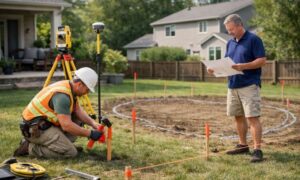
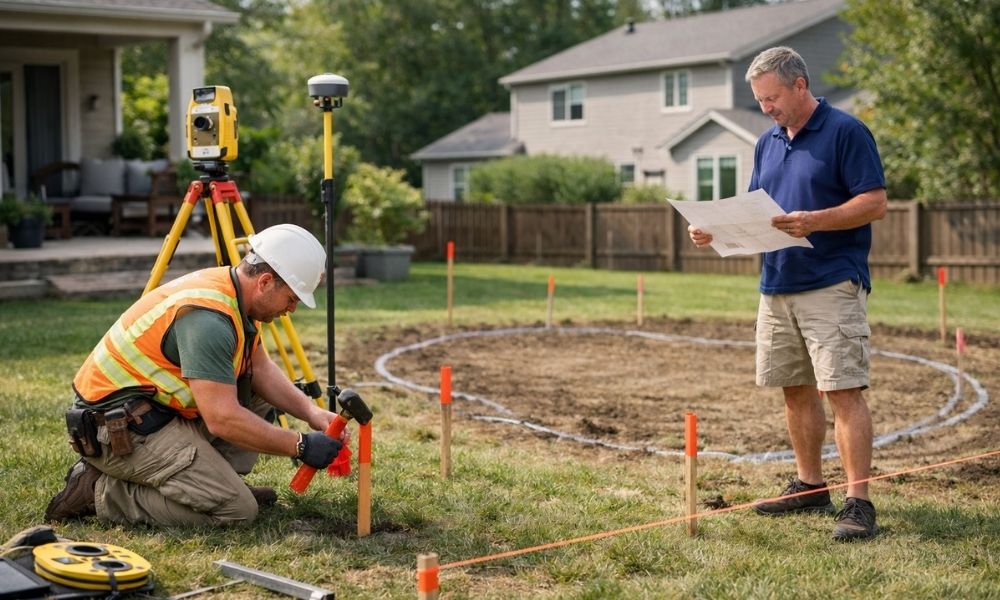
A professional boundary survey shows exactly where the legal property lines fall. That gives the design team a reliable base to work from.
With that data, designers can place the pool, deck, and future features without guessing. They can maximize the space. They can plan the layout once and build it right.
Hidden Site Restrictions Can Influence Pool Layout Options
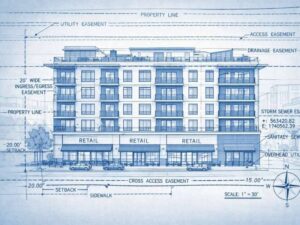
Property lines are only part of the picture. There is often more recorded on a deed or plat that affects where a pool can go.
What Can Limit Pool Placement
- Utility easements: Gas, electric, and sewer lines run underground. Easements grant utility companies access to those areas. Building over them is not allowed.
- Drainage corridors: Some properties have recorded drainage paths. These protect water flow patterns across a neighborhood.
- Setback requirements: Ohio municipalities require pools to sit a set distance from property lines, structures, and streets. These vary by city and county.
- Deed restrictions: Some neighborhoods have covenants that limit pool size, placement, or style.
Finding out about these restrictions after excavation begins is expensive. Finding out before design starts is just smart planning.
A boundary survey brings recorded restrictions to light early. That gives homeowners the chance to adjust plans before any money is spent on construction.
Better Survey Data Improves Coordination Between Project Professionals
A pool project rarely involves just one contractor. You might have a pool builder, an excavation crew, a landscape architect, an engineer, and a permit consultant all working on the same project.
Each one needs site information. If they are all working from different sources, errors happen.
One Set of Data, Fewer Misunderstandings
When everyone references the same survey, work lines up. Excavation crews dig where they are supposed to. Fencing contractors set posts at the right location. Permit consultants submit accurate site plans.
This cuts down on rework. It reduces back-and-forth between trades. It keeps the project moving.
According to the National Society of Professional Surveyors, unclear site data is one of the leading causes of construction delays on residential projects. A shared survey document solves that problem before it starts.
Protecting a Major Backyard Investment From Costly Changes
A pool is not a small purchase. In Ohio, a residential pool installation often runs between $50,000 and $100,000 or more when decking, fencing, and landscaping are included.
That is a serious financial commitment. Protecting it means planning carefully before construction begins.
What Can Go Wrong Without a Survey
- Pool placed too close to a property line, triggering a stop-work order
- Excavation hitting an undiscovered utility easement, requiring relocation
- Permit rejection due to inaccurate site dimensions on the application
- Neighbor disputes over encroachment after concrete is already poured
Each of these scenarios adds cost. Some add months of delay. A few result in partial demolition.
A boundary survey before construction is far less expensive than any of these outcomes. It is also one of the few upfront costs that can directly reduce total project risk.