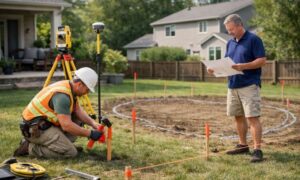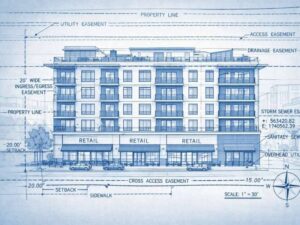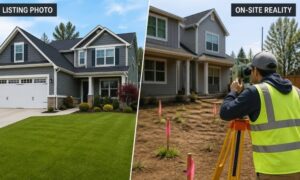

LiDAR mapping is rapidly transforming how elevation challenges are addressed in Ohio’s land development projects. With the state’s mix of flat farmland and rolling terrain, builders and planners often face grading issues, drainage concerns, and costly construction delays due to inaccurate elevation data. By using LiDAR mapping early in the process, professionals gain precise topographic insights that help streamline planning, reduce risks, and support smoother project execution.
Elevation Issues in Ohio Land Development
Ohio’s diverse landscape includes flat farmland in the west and rolling hills toward the southeast. These elevation differences, while natural, pose major obstacles for planners and developers.
Common issues caused by poor elevation data include:
- Inaccurate grading
- Poor drainage
- Permit delays
- Failed site inspections
Traditional elevation surveys can take time and may miss small—but important—variations in the land.
Why LiDAR Mapping Is Valuable in Ohio
Across the state, LiDAR mapping is helping land professionals make better decisions earlier in the project timeline.From the flat plains of northwest Ohio to the hilly Appalachian Plateau, developers benefit from topographic data for Ohio land development that leads to:
- More accurate cut-and-fill estimates
- Better drainage and runoff planning
- Avoidance of flood-prone areas
- Smoother coordination with civil engineers and permitting offices
It’s especially useful during early feasibility studies and site preparation phases.
Where It’s Being Used
LiDAR mapping services in Ohio are now widely used in site planning, grading design, and floodplain analysis—especially in areas with complex elevation profiles.
Here are just a few common uses of LiDAR mapping in Ohio projects:
- Subdivision Planning: Ensuring streets and lots follow proper slope guidelines
- Stormwater Management: Designing systems that match natural drainage flows
- Grading Plans: Optimizing earth movement before heavy machinery arrives
- Access Roads and Driveways: Adjusting elevation to meet local code and usability needs
What to Look for in a LiDAR Mapping Provider
Not all mapping is created equal. A reliable provider will:
- Be FAA-certified to operate drones
- Use high-quality LiDAR sensors
- Deliver clean data compatible with CAD/GIS systems
- Understand Ohio’s permitting and elevation code requirements
When combined with licensed land survey expertise, this approach delivers both speed and compliance.
Final Thoughts
Elevation challenges are part of land development—but costly surprises don’t have to be. In Ohio, LiDAR mapping is becoming the go-to tool for accurate, fast, and site-ready elevation data. It helps planners stay on schedule and on budget, without sacrificing detail or reliability.
When it comes to land, what you don’t see can hurt you. LiDAR mapping ensures you see it all—clearly, and from the start.
FAQs
1. Is LiDAR mapping accurate enough for construction?
Yes. With modern sensors and expert processing, LiDAR mapping offers accuracy suitable for design and permitting phases.
2. How is LiDAR different from drone photography?
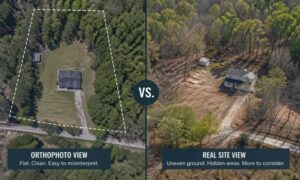
Photography captures surface images. LiDAR uses laser pulses to measure elevation—even under vegetation.
3. Can LiDAR mapping be used in wooded or uneven terrain?
Absolutely. It performs especially well in areas with trees or irregular topography.
4. How long does it take to get LiDAR mapping results?
Most surveys are delivered within a few business days, depending on site size.
5. Is LiDAR mapping allowed for legal surveys?
LiDAR data supports design and planning but must be reviewed or verified by a licensed surveyor for legal boundary work.