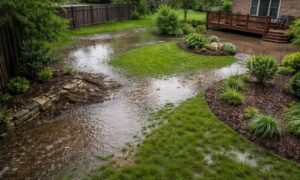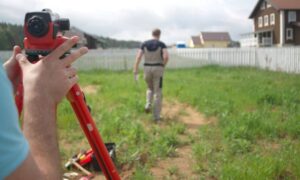
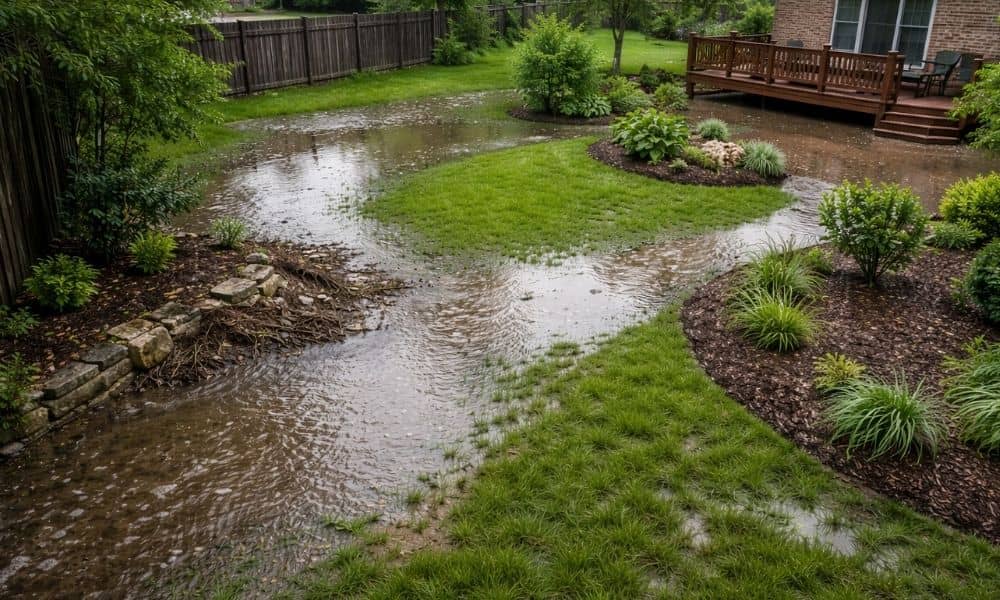
Recent storms moved through Dayton and nearby areas with strong rain and wind. After the skies cleared, many homeowners noticed something strange. Water pooled in parts of their yard. Soil washed away along fences. Some even saw water moving toward their house. At first, these problems may seem new. However, storms often reveal issues that have existed for years. Heavy rain simply makes them easier to see. So what causes these surprises? In many cases, the answer lies in the shape of the land itself. A topographic survey can help show what is really happening on your property. That’s why many property owners turn to professional topographic survey services when they want to understand how their land sits and why water behaves differently after a heavy storm.
Storms Often Show What the Land Has Been Hiding
During dry weather, most yards look fine. Grass grows, the ground feels firm, and water drains away quickly after light rain.
However, a major storm tells a different story.
Large amounts of rain push water across the land much faster. As a result, small slopes and low spots start to matter. Water flows downhill, collects in dips, and moves toward the easiest path.
Because of this, many homeowners notice problems such as:
- Standing water in one part of the yard
- Mud that stays for days after rain
- Soil washing away near fences or garden beds
- Water moving toward patios or driveways
These issues rarely appear overnight. Instead, the storm simply makes the natural shape of the land easier to see. When someone takes a closer look—often through a detailed topographic survey of your property—those small slopes and low areas start to make much more sense.
Why Water Moves the Way It Does on Your Property
Many people think their yard is flat. Yet land almost never sits perfectly level.
Even small height changes can affect how water moves. In fact, a difference of just a few inches can change the direction of runoff.
Several factors control how water flows across your property:
Natural slopes. Land usually tilts in one direction, even if the slope looks small.
Low areas. Small dips in the ground collect water during heavy rain.
Higher nearby land. Water often flows from higher lots toward lower ones.
Landscaping changes. Retaining walls, patios, and garden beds can redirect water.
Because these changes can be subtle, many property owners never notice them. However, a topographic survey maps these elevation changes and shows the true shape of the land.
What a Topographic Survey Can Show After a Storm
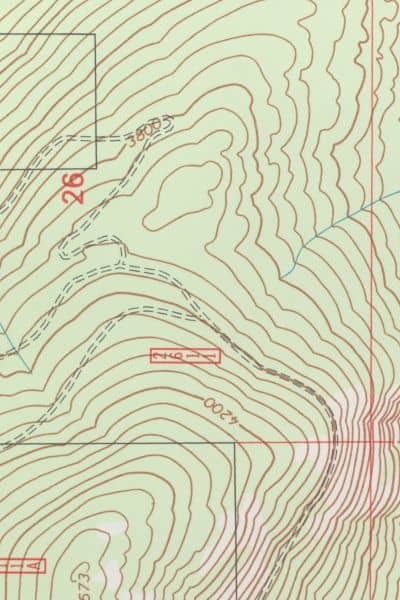
After a major rainstorm, homeowners often want to know one thing: Why did water collect here?
A topographic survey can help answer that question.
This type of survey shows elevation across the property. In other words, it reveals where the ground rises and where it falls. As a result, the survey can show:
- The lowest points where water collects
- Natural drainage paths across the yard
- Slopes that direct water toward structures
- Elevation differences between nearby properties
With this information, property owners can see how rainwater travels across the land.
Sometimes the answer surprises people. For example, the lowest spot may sit closer to the house than expected. Other times, the land next door may sit slightly higher and send water downhill during storms.
Understanding these patterns can explain many drainage problems.
When Neighboring Properties Affect Your Yard
Stormwater does not stop at property lines. Instead, water follows gravity.
Because of this, nearby properties can influence how water flows across your yard.
For example, water may move downhill from a neighboring lot. In other cases, landscaping changes next door may redirect runoff toward your property.
After heavy rain, some homeowners suddenly see water flowing along fences or pooling near shared boundaries.
These situations can feel confusing. Yet elevation differences often explain them.
A topographic survey helps reveal how nearby land sits compared to your property. Once the elevation becomes clear, the water patterns usually make much more sense.
Why Some Yards Flood Even Outside Flood Zones
Many homeowners check flood maps when buying property. If the property sits outside a flood zone, they assume flooding will never happen.
However, local drainage issues can still occur.
Small depressions in the yard may trap rainwater. Poor grading from older landscaping may slow drainage. In addition, natural terrain changes can redirect runoff during large storms.
These problems do not always show on flood maps. Yet they can still cause standing water after strong rain.
A topographic survey can reveal these small elevation changes that affect local drainage.
How Land Can Change Over Time
Sometimes drainage problems appear years after someone buys a property. At first, the yard drains normally. Then one storm reveals a new issue.
Several things may cause this change.
For example, soil may slowly settle. Landscaping projects may alter the slope of the yard. Tree removal may change how water moves across the ground.
Nearby construction can also influence drainage patterns. When land changes next door, water sometimes finds a new path.
Because these changes happen gradually, many property owners do not notice them right away. However, a major storm can make the problem clear.
A topographic survey helps show how the land currently sits, even if conditions have shifted over time.
Signs You Should Look Closer at Your Land
After a storm, it may help to pay attention to how water behaves around your property.
Certain signs often point to elevation or drainage problems.
For example, you may notice water pooling in the same area after every storm. Mud may stay for days in one part of the yard. Soil may wash away near slopes or garden beds.
In some cases, water may flow toward the house instead of away from it.
When these patterns repeat, the shape of the land may be the reason.
A topographic survey can help explain what is happening beneath the surface.
Storms Reveal the Story of Your Land
Storms can feel destructive. Yet they also reveal important clues about how your property behaves during heavy rain.
Standing water, erosion, and runoff often point to small elevation changes that most people never notice.
A topographic survey helps uncover those hidden details. By showing the true shape of the land, the survey makes it easier to understand how water moves across the property.
For homeowners, that knowledge can bring clarity after a storm. Instead of guessing why water collects in certain places, you can finally see how the land works.
And once you understand your land, you can make better decisions about protecting and improving your property.