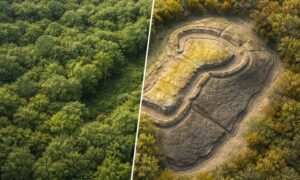
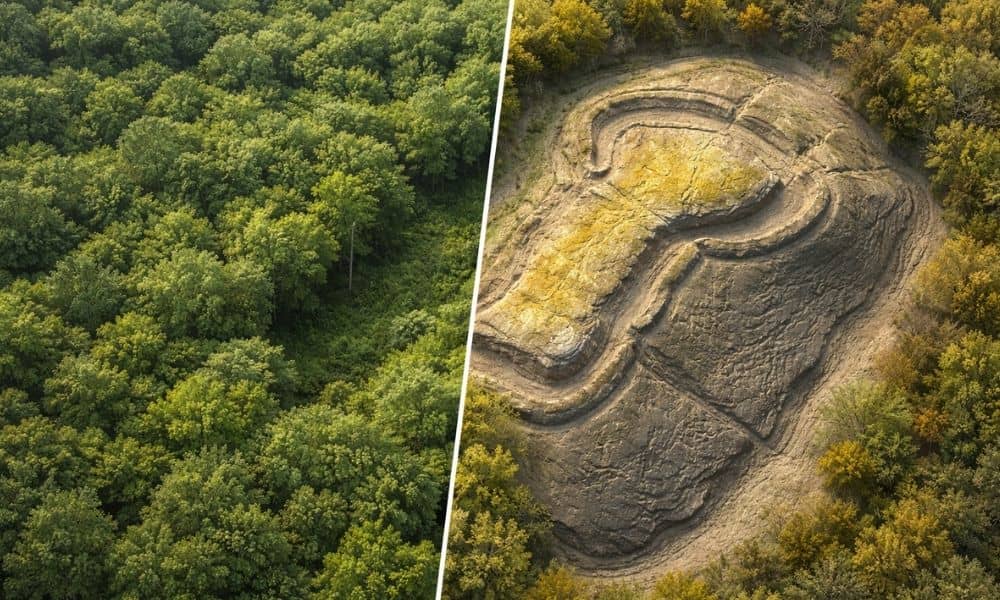
Recently, archaeologists made big news after they found a 5,000-year-old fortress hidden under thick forest. For hundreds of years, trees and brush covered its walls. People walked above it without knowing what was there. However, researchers used special scanning tools to see through the trees and reveal the true shape of the land. That discovery teaches us something important. Sometimes, what looks normal on the surface hides something that changes everything. In Columbus, Ohio, land development faces the same problem. A site may look flat and ready to build. Yet hidden slopes, drainage paths, and old grading marks may sit just below the surface. That’s where a modern lidar survey makes a big difference.
The Real Lesson Isn’t Just About History
The fortress story is not only about ancient ruins. Instead, it shows how easy it is to miss key details when we trust only what our eyes can see.
In the same way, many projects in Columbus start with a simple site visit. Teams walk the land. They take pictures. They look at public maps. At first, the property may seem easy to develop.
However, wooded lots, creek edges, and older sites often hide small land changes. These small details can affect grading, stormwater design, and even how much land you can really build on.
So, the lesson from the fortress is clear: get better information before making big choices.
What Columbus Land Often Hides
Central Ohio has flat farmland, rolling hills, wooded areas, and stream corridors. Because of this mix, hidden land issues show up more often than people expect.
For example, wooded sites can hide small elevation changes. The land may look level, but slight rises or dips can change where you place a building.
Also, land near creeks may have shallow swales that move water in ways you cannot see at first. These features may not stand out during a quick visit. Still, they can affect drainage plans in a big way.
Older redevelopment sites bring more risk. Past construction may have changed the land. Over time, grass and trees grow over these changes. As a result, the ground looks natural even though it was shaped by machines years ago.
Because of this, guessing based on sight alone often leads to surprises.
Why a Lidar Survey Makes a Difference
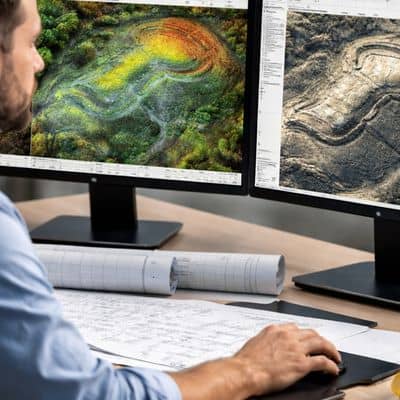
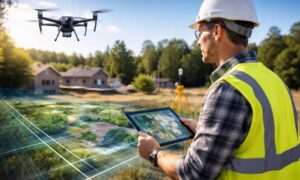
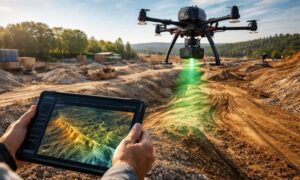
A lidar survey helps teams see past trees and surface clutter. Instead of guessing how the land flows, they can review clear terrain data that shows small changes in elevation.
This matters most at the start of a project. Before you invest in design, you need to know what you are buying.
For example, a property may list ten buildable acres. However, when you study the terrain more closely, slopes or drainage paths may reduce that number. That change affects cost, layout, and timeline.
Also, early terrain data helps engineers place roads, utilities, and buildings in better spots. Instead of fixing problems later, they make smarter choices from the beginning.
Because of this, developers feel more confident when talking with partners and city officials.
Small Land Details Can Create Big Problems
Many expensive issues start small.
A low ridge might force a utility line to move. A shallow dip could require more stormwater storage. A small slope might affect how people access a building.
Each issue may seem minor at first. Yet together, they can delay a project and raise costs.
On the other hand, when teams find these land details early, they can plan around them. They adjust designs before submitting permits. They update budgets before construction starts.
The fortress story worked the same way. Researchers studied the land carefully. Once they understood its shape, the hidden walls became clear.
Land development works best when decisions rely on clear data instead of guesswork.
Better Due Diligence Before You Commit
Buying land can move fast. However, rushing without strong site knowledge often leads to regret.
A lidar survey strengthens your due diligence. And just as important, the people behind the data matter too. When a licensed lidar survey team reviews the terrain, they don’t just hand over a file. They understand how small elevation changes can affect drainage, grading, and how much of the land you can actually build on.
That experience helps answer key questions:
Where does water really flow? Where do slopes start and end? Which parts of the land support building without major grading?
With this information, you lower your risk before signing contracts or finishing designs.
Also, strong terrain data helps when you submit plans to the city. When your design matches real land conditions, approvals often move more smoothly.
While no tool removes all risk, better visibility reduces avoidable mistakes.
Timing Matters in Central Ohio
Columbus has clear seasons. During leaf-off months, trees have fewer leaves. Because of that, scanning tools often capture ground detail more clearly.
Planning your survey at the right time can improve results. Also, gathering terrain data before clearing trees helps record the land in its natural state.
This early view lets teams compare current land with planned grading. As a result, they make better design choices.
The “Fortress Test” for Your Property
Before moving forward, ask yourself a few questions.
Does the site have heavy tree cover? Is it close to water or low areas? Does it have an unclear grading history? Is it a large site with mixed terrain?
If you answer yes to two or more, hidden land features likely exist. In that case, a lidar survey can give you the clarity you need.
Data Before Decisions
The 5,000-year-old fortress stayed hidden until experts studied the land closely. Once they saw the real shape of the terrain, everything changed.
Columbus projects follow the same rule. You cannot manage what you cannot see. Clear terrain data leads to better layouts, stronger budgets, and smoother approvals.
In the end, a lidar survey does more than create contour lines. It helps you move forward with confidence. And in land development, confidence based on real data often makes the difference between a smooth project and a stressful one.
Before you design, before you budget, and before you break ground, make sure you truly understand the land. The right information at the right time protects your investment—and helps you avoid discovering your own hidden “fortress” too late.