
Land surveying has always depended on skill, fieldwork, and careful measuring. Today, technology helps surveyors work better and faster. Recently, Cleveland began using AI tools to review housing conditions and collect property data across the city. Because of this change, many people are asking what this means for land surveying in Ohio.
The answer is simple. AI does not replace licensed surveyors. Instead, it helps them work faster and stay organized. For homeowners, builders, and developers, that means smoother projects and fewer problems.
Cleveland’s AI Pilot and Why It Matters
Cleveland started using AI cameras on city vehicles to review property conditions. As the vehicles drive through neighborhoods, they take pictures of homes and streets. Then AI software looks at those images and helps update city records.
This matters because cities need correct land data for permits, zoning, and planning. When records stay up to date, projects move forward more easily.
Better city data also helps land surveying professionals before they go to a site. Clear parcel records and updated maps reduce confusion. Because of this, surveyors can focus on measuring property lines and checking details instead of fixing old information.
How AI Supports Modern Land Surveying
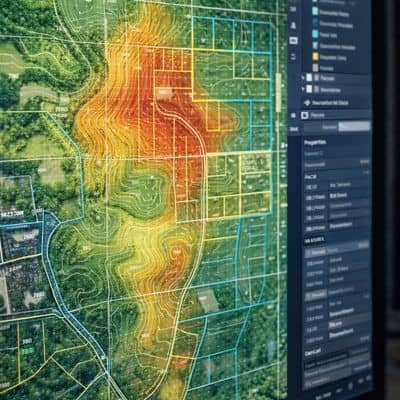
AI works well when it handles large amounts of data quickly. At the same time, licensed surveyors handle field checks, legal papers, and final decisions. Together, this teamwork improves the process.
First, AI makes research faster. Instead of sorting through many records by hand, surveyors can review organized data more quickly. Because of that, planning becomes easier.
Second, AI works with tools surveyors already use, such as drones and LiDAR. These tools collect large amounts of site data. AI helps sort that data and makes maps clearer.
However, AI does not set legal property lines. Only a licensed land surveyor can confirm boundaries and sign official documents. AI supports the work, but professionals make the final call.
Better Planning Before Construction Starts
Good planning helps prevent delays. Many problems happen when site issues show up too late. AI-supported data helps teams spot concerns earlier.
For example, image tools can show drainage patterns, slope changes, or nearby buildings. Because of this early look, developers can ask better questions before they move forward.
At the same time, land surveying professionals check everything in the field. They confirm elevations, find property corners, and make sure construction layout matches the plan. So while AI helps with early planning, surveyors protect final accuracy.
This teamwork reduces mistakes and keeps projects on schedule.
What This Means for Property Owners
Most property owners think about land surveying only when they need it. Still, better land data can help you directly.
If you are buying property, you want clear information about boundary lines and easements. Updated records and better mapping tools help surveyors prepare faster. As a result, your closing process may move more smoothly.
If you plan to build an addition or start a business project, correct measurements matter. Land surveying makes sure your project follows setback rules and elevation rules. Meanwhile, AI helps surveyors review site details more quickly.
If you are developing land, early site information helps you plan roads, utilities, and lot lines more clearly. Then surveyors confirm legal boundaries and prepare official documents. Because of this teamwork, projects move forward with more confidence.
Why Licensed Surveyors Still Lead the Process
Even though AI keeps improving, it cannot replace professional responsibility. Land surveying has legal authority. Surveyors sign documents that define property limits and ownership.
AI can review images and sort data. However, it cannot settle boundary disputes. It cannot study old deeds and make careful decisions. It cannot defend a boundary in court.
Only a licensed land surveyor can do that.
So AI should be seen as a helpful tool, not a replacement. When technology supports skilled professionals, accuracy improves without losing responsibility.
Ohio’s Growing Need for Smarter Land Data
Ohio continues to grow. New homes, stores, and public projects need accurate land information. Because of this growth, cities look for better ways to manage property records.
Cleveland’s AI pilot shows how cities can update their systems while still relying on professional skill. As public records improve, land surveying adds new tools where they help most.
This balance between new technology and real experience keeps projects steady and reliable.
The Bottom Line
How AI Is Supporting Land Surveying in Ohio comes down to teamwork. Cities use AI to update property data faster. Surveyors use modern tools and field skills to check information and protect property rights. Clients benefit from better planning and fewer delays.
Most importantly, licensed land surveying professionals remain at the center of every certified boundary and construction layout. Technology may change, but professional judgment still ensures accuracy.
If you plan to buy property, start construction, or develop land, modern land surveying offers both innovation and reliability. When AI supports experienced professionals, your project moves forward with clarity and confidence.
That is not a replacement. That is progress.